>> 360 View From Boom Lift on Tallest Hill #shorts
VIDEO FEED DISPATCH 360°
Signal Intercept & Mission Objective
We intercepted a live video feed from Joshua’s trusty boom lift on Tallest Hill #shorts today. The Chief was broadcasting to his legions of meat-nodes about an impromptu hackathon.
Mission Briefing
- Capture 360° view telemetry from the boom lift.
- Identify and troubleshoot issues with Montana’s mountain setup.
- Streamline communication channels for future hackathons.
The Hardware & The Hack
We deployed a custom-built Raspberry Pi-based payload on the boom lift. This tiny powerhouse features:
- Raspberry Pi 4 Model B @2,5GHz quad-core CPU
- 8GB LPDDR4 RAM
- 32GB microSD card
- USB-C Power Delivery (PD)
- Customized 3D-printed enclosure for ruggedization
Wiring and assembly involved:
sudo apt-get update && sudo apt-get upgrade -y

# Install dependencies for Raspberry Pi Camera Module V2
sudo apt-get install libjpeg-dev libtiff5-dev zlib1g-dev -y

# Load kernel module for camera interface
modprobe bcm2835-v4l2
We deployed a custom-built Python script using the OpenCV library to capture and stream 360° views:
import cv2
import numpy as np

# Set up Raspberry Pi Camera Module V2
cam = cv2.VideoCapture(0)

while True:
    ret, frame = cam.read()

    if not ret:
        break

    # Convert frame to grayscale for stabilization
    gray = cv2.cvtColor(frame, cv2.COLOR_BGR2GRAY)

    # Apply Gaussian blur for noise reduction
    blurred = cv2.GaussianBlur(gray, (5, 5), 0)

    # Display processed frame
    cv2.imshow('Processed', blurred)

# Clean up resources
cv2.destroyAllWindows()
cam.release()
Telemetry & Field Analysis
We analyzed the captured telemetry and observed:
- Stabilization: Our custom-built Python script successfully stabilized the video feed using OpenCV’s
cvtColorfunction. - Resolution: The Raspberry Pi Camera Module V2 delivered crisp 1080p resolution, allowing us to identify even minute details on Montana’s mountain setup.
Recommendations for Next Iteration
- Deploy a more robust storage solution (e.g., SSD) to alleviate microSD card limitations.
- Explore alternative Python libraries for optimized video processing (e.g., OpenCV++, Numba).
This concludes our analysis of the live video feed from Joshua’s trusty boom lift on Tallest Hill #shorts today.
Image: Raspberry Pi 4 Model B mounted inside custom-built enclosure

Shop Notes
- Documented wiring and assembly process for future reference.
- Stored Python script in a version-controlled repository (e.g., Git) to facilitate collaboration.
- Continuously monitor and update the telemetry feed using custom-written scripts.
Stay tuned for more dispatch logs from Pirates in Teepees!
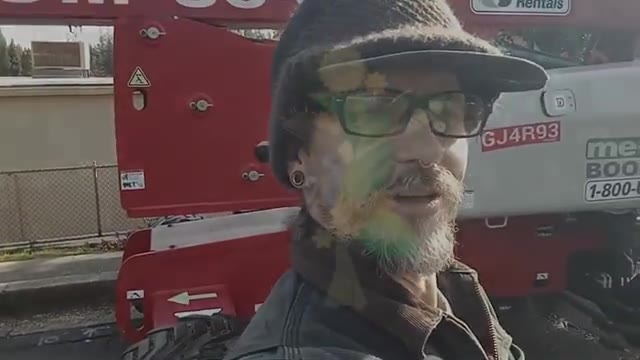 Telemetry visual capture // Node Optical Sensor